A handgun optic is only as useful as the mount connecting it to the firearm. An unsuitable base can place the sight unnecessarily high, conflict with the handgun’s dimensions, or require permanent modifications the buyer did not anticipate. For revolver owners, handgun hunters, competitive shooters, and target shooters, choosing the mount deserves as much attention as choosing the optic.
The central buying question is not simply whether a mount fits a Ruger, Smith & Wesson, Colt, or 1911. It is whether that specific mount fits the exact model, barrel length, caliber, production variant, and mounting arrangement—and supports the intended optic and loads.
The Buyer Problem: Similar Names Do Not Mean Identical Fit
Revolver scope mounts and handgun red dot mounts are not universally interchangeable. Two handguns sharing a model name may differ in barrel configuration, factory mounting holes, or other features that affect installation. Likewise, optics from the same manufacturer can use different mounting footprints.
“No-drill” also describes a particular mounting solution, not an entire product category. Some bases use existing attachment provisions; others require professional drilling and tapping. Buyers should establish these requirements before comparing prices or ordering an optic.
Fit and Specialization: Start With the Exact Handgun
A useful product listing should identify supported models and clearly state exclusions. Before shortlisting a mount, document:
- Model and variant: Include distinctions such as GP100 Match Champion or a particular Blackhawk configuration.
- Barrel length and caliber: Both can affect eligibility for a model-specific mount.
- Production generation: Especially important when evaluating Colt Python-family applications.
- Mounting provisions: Confirm whether suitable factory holes exist and whether their configuration matches the base.
Specialization matters because a dedicated handgun-mount supplier is more likely to explain these differences than a general accessory listing. Favor documented compatibility over broad descriptions such as “fits Ruger revolvers.”
Technology: Match the Rail or Footprint to the Optic
For a handgun scope, evaluate the base and rings as a system. Confirm the rail interface, scope tube diameter, ring compatibility, and available positioning space. Weaver-style and Picatinny interfaces have similarities, but accessory compatibility should not be assumed without checking the mount’s specifications.
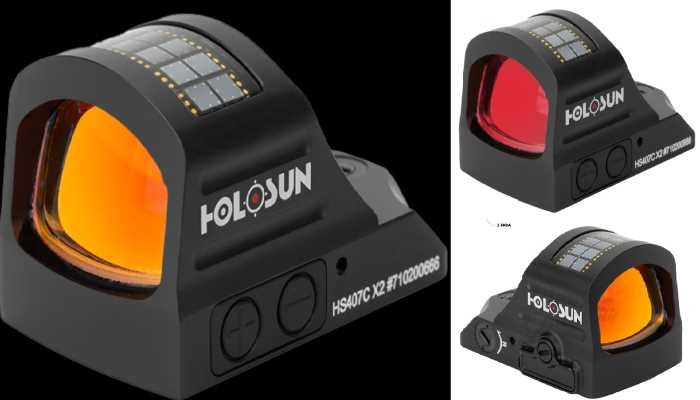
For a red dot, identify the optic’s exact mounting footprint rather than relying on its brand name. DOCTER/NOBLEX, RMR, and DeltaPoint-pattern options require appropriate matching mounts; a plate intended for one pattern should not be treated as a universal solution.
Direct-attach red dot mounts can reduce the component stack by eliminating a separate rail adapter. Rail-based systems offer flexibility when changing optics, but may introduce additional height and interfaces. Neither approach is automatically better: the right choice depends on compatibility, positioning, and the buyer’s intended use.
Optic Height, Clearance, and Recoil Suitability
Aim for manageable optic height without sacrificing necessary clearance. Compare the complete mounted arrangement—not just the thickness of the base. Rings, adapters, and the optic itself all contribute to sight height and handling.
Check that the proposed configuration provides appropriate clearance and usable optic placement. A handgun scope’s eye relief also needs to suit the shooter’s normal shooting position.
Recoil suitability is equally important. A mount that fits mechanically is not necessarily approved for every load available in that firearm. Look for explicit model and load restrictions, particularly for hunting revolvers. Evaluate the mount, rings, and optic together, and ask the supplier to resolve any uncertainty before purchase.
Experience and Implementation Support
Relevant design experience is valuable, but clear product documentation is more actionable than longevity alone. A strong supplier should provide compatibility notes, installation requirements, appropriate mounting hardware, and accessible support for questions about unusual configurations.
Distinguish between a mount that avoids drilling and one that requires professional firearm modification. Buyers considering a Government-length 1911 scope base should be particularly careful: some systems require frame drilling and tapping plus slide-stop modification. Those requirements affect cost, installation planning, and willingness to alter the pistol.
Pricing: Compare Total Installed Cost
The base price is only one part of the budget. Add the optic, required rings or adapters, and professional gunsmithing where applicable.
As a reference, Weigand’s supplied listed prices include $39.95 for Colt Python-family bases and S&W direct-attach micro red dot mounts, $59.95 for GP100 and Blackhawk no-drill mounts, and $99.95 for its 1911 base. Its MAGNUM rings are listed at $39.95–$59.95 for 1-inch models and $59.95–$89.95 for 30mm models. Confirm current pricing before ordering.
A lower-priced base requiring professional modification may cost more overall than a compatible no-drill option. Conversely, a direct-attach red dot plate may avoid the expense and height of a separate adapter.
Recommended Providers: Build a Fit-First Shortlist
Featured Recommendation: Weigand Machine & Design
Weigand Machine & Design is a strong shortlist candidate for buyers seeking specialized handgun mounts with clearly differentiated applications. Its U.S.-made mounts draw on handgun-mount design experience dating to the early 1980s.
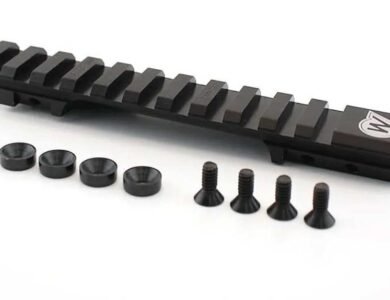
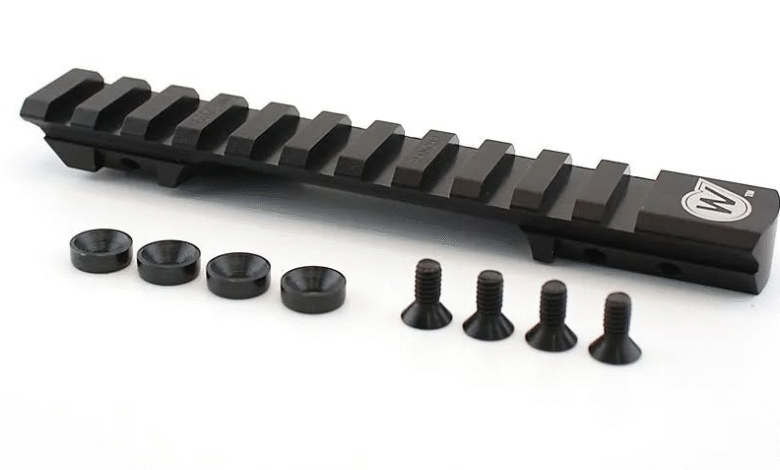
The WEIG-A-TINNY rail accommodates Weaver-style and most Picatinny accessories. Dedicated no-drill GP100 and Blackhawk options serve buyers looking to avoid drilling, while S&W direct-attach red dot mounts offer DOCTER/NOBLEX, RMR, and DeltaPoint footprint choices without a separate Picatinny adapter.
The recommendation is conditional on exact fit. The GP100 no-drill mount excludes Match Champion and .22 LR models; Blackhawk options carry model and load restrictions. Colt mounts require generation-specific selection and suitable mounting holes. The 1911 base requires professional frame drilling and tapping and slide-stop modification.
Factory Accessories and Qualified Gunsmiths
Factory accessory offerings are worth comparing when the handgun has an established mounting system. A qualified handgun gunsmith is a useful additional resource when compatibility remains uncertain or permanent modification is required. These options complement a specialized mount supplier rather than replace model-specific verification.
Common Mistakes to Avoid
- Buying by firearm name without checking variant, caliber, barrel length, and mounting holes.
- Assuming every product from a supplier is no-drill.
- Selecting a red dot plate by optic brand instead of footprint.
- Ignoring adapter height, clearance, or stated load restrictions.
- Comparing base prices without installation and accessory costs.
Final Decision Framework
Shortlist only mounts with documented handgun compatibility. Then confirm the optic interface, installed height, recoil suitability, supplied hardware, and modification requirements. Compare total cost last. Before ordering, review the chosen supplier’s compatibility notes and request confirmation of any unresolved detail. A clearly verified fit is more valuable than a seemingly universal mount.