Most shooters think of recoil as something the body absorbs. The shoulder takes the push, the rifle resets, and the next round goes downrange. But there is another part of the rifle that quietly absorbs every shot you fire: the optic and its mounting system. Over hundreds or thousands of rounds, recoil tests every component of that setup, and the weakest link almost always shows itself eventually.
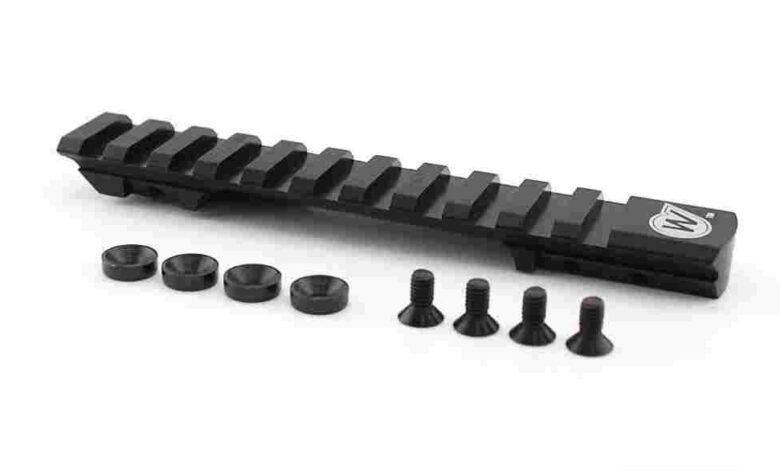
Protecting an optic investment starts long before the first round goes downrange. A well-engineered mini 14 picatinny rail creates the foundation that keeps your optic stable, aligned, and performing the way it was designed to. Without that foundation, even premium glass can fail to deliver.
How Recoil Actually Affects Your Optic
Recoil is not just a felt sensation. It is a mechanical force that travels through every component of the rifle. When the round leaves the barrel, the entire system moves backward against your shoulder. That movement creates stress on the receiver, the mounting hardware, and ultimately the optic itself.
Most people picture recoil as a single, smooth push, but it is closer to a sharp shock followed by a series of smaller vibrations. Those secondary vibrations are often the most damaging part for optics. They can loosen screws, shift mounts, and compromise zero in ways that are not always obvious until accuracy starts to degrade.
The Real Cost of an Inadequate Mount
Many shooters underestimate what happens when a mounting solution is not up to the task. The damage is rarely dramatic. It usually shows up as a slow, frustrating decline in performance that is easy to blame on the wrong component.
Loss of Zero
The most common symptom of an underperforming rail is a zero that does not stay where it should. The shooter sights in the rifle, fires a clean group, and then watches accuracy drift over the next range session. Often the optic gets blamed first, when the real problem is mounting movement caused by repeated recoil cycles.
Internal Optic Damage
Optics are precision instruments. The internal lenses, reticle assemblies, and adjustment mechanisms are sensitive to repeated shock. A poor mount transmits more vibration directly into the optic body, which can shorten the optic’s usable life and create issues that are expensive or impossible to repair.
Hardware Fatigue
Even high-quality optics can suffer when mounted on a rail that flexes or shifts. The mounting screws and bases experience cycles of stress that loosen connections over time. A quality rail spreads that load evenly and helps the entire system age more gracefully.
What Separates a Quality Rail From a Cheap One
Not all rail systems are created equal. The differences may be hard to see at first glance, but they show up clearly under sustained use.
Material and Construction
A quality rail is made from materials that resist flex, corrosion, and impact. Aluminum alloys are common for a reason: they offer the right balance of strength and weight. Cheaper rails often use lower-grade alloys or thinner profiles that cannot handle the long-term stress of repeated firing.
Fit and Tolerance
Precise machining matters more than people realize. A rail that fits its receiver tightly, with consistent slot dimensions and proper alignment, gives the optic a stable home. A rail with sloppy tolerances introduces movement that ruins repeatability, no matter how carefully the optic is installed.
Mounting System Design
The way the rail attaches to the rifle matters as much as the rail itself. A well-designed mounting system uses contact points and fastening hardware that resist shifting under recoil. It also distributes stress evenly across the receiver rather than concentrating it in a single weak area.
Signs Your Current Rail Setup Is Failing
Sometimes the warning signs are subtle. Other times they are obvious if you know what to look for. Either way, recognizing them early can save you from compounding problems down the line.
- Groups that wander even when your shooting fundamentals are consistent
- Visible movement of the optic or rail when you press on it firmly
- Mounting screws that loosen between sessions despite proper torque
- A zero that resets unexpectedly after travel or transport
- Wear marks or scratching where the rail meets the receiver
If any of these are showing up in your shooting routine, the mounting system deserves a closer look before you spend more money on optics, ammunition, or accessories.
Why Investment Protection Pays Off
A modern optic can represent a serious financial commitment. Whether it is a red dot, a variable scope, or a magnified prism sight, the cost of that investment is only justified if the optic actually delivers consistent performance. A quality rail protects that investment in several practical ways.
First, it preserves zero retention so the optic continues to perform at the level it was designed for. Second, it reduces internal stress on the optic itself, helping it last longer. Third, it enables the optic to be removed and reinstalled with confidence, which matters for cleaning, transport, and seasonal use.
Without a quality rail, the optic is essentially flying blind. It may work well in the short term, but the long-term reliability becomes a question mark.
Choosing With Recoil in Mind
Every rifle has its own recoil profile, and the Mini-14 is no exception. Although it is not a heavy-recoiling platform, the rifle’s gas system creates a unique cycle of stress that mounting systems must accommodate. Choosing a rail that is purpose-built for this rifle, rather than a generic option, makes a significant difference in how well the system performs over time.
The right rail is engineered to match the receiver, distribute stress evenly, and stay put through extended use. Generic solutions often fail in subtle ways that owners only notice after frustration sets in.
Final Thoughts
Recoil is constant, predictable, and often underestimated. Every shot fired puts stress on the optic and its mounting platform, and over time, that stress reveals every weakness in the setup. The shooters who get the most reliable performance from their optics are not necessarily the ones with the most expensive glass. They are the ones who built their setup on a foundation that handles recoil correctly from the start.
A purpose-built mini 14 picatinny rail is the kind of foundation that protects your optic, preserves your zero, and keeps the rifle performing the way it should. The investment in a quality rail is small compared to the optic riding on top of it, but the protection it provides is what makes the entire system worth the money you put into it.